

I've typically tried to think about what Makewana, the unique feminine rainmaker of historical Malawi, should have regarded like.
There's a statue of her with lengthy hair at Mua Mission in Dedza, since to chop her hair would have signified drought.
The title means “Mom of Youngsters” – a title handed down via the generations of rainmakers. As soon as recognized as Makewana, a lady would stay at Msinja shrine and be deemed answerable for rain.
Makewana is the title we determined to make use of when, in 2014, Hendrina Kachapila, Ranka Primorac and I had been speaking about Malawian writers. Ranka was within the nation researching girls’s writing in southern Africa. She requested, “The place are the Malawian feminine writers?” We didn’t have a prepared reply.
Have been there any girls writing in Malawi? Oh positively. There was Walije Gondwe, Emily Mkamanga, Catherine M’bawa, Cecilia Dube. We paused, making an attempt to assume. The truth that we needed to pause, search and bear in mind, spoke volumes. It was not so difficult to provide you with names for male authors. In seconds, I might provide you with the names of 5: Jack Mapanje, David Rubadiri, Steve Chimombo, Aubrey Kalitera and Ken Lipenga. That day, the three of us determined that we might do extra to search out out the place the ladies had been.
Hendrina got here up with the title Makewana’s Daughters for our on-line discussion board, the title of Jessie Sagawa’s PhD thesis, Daughters of Makewana: A research of girls in chosen Malawian novels in English. We thought of Malawi’s historical past, and the management of rainmakers within the 18th century. We couldn't resist the urge of connecting creation and creativity, and we felt that the rainmaker’s robust picture could be inspirational to girls searching for to finish the nation’s literary drought. Our slogan, “Let phrases rain and reign”, mirrored all that Makewana’s Daughters was aiming for.
We now have not discovered all of the solutions as to why Malawi doesn't have as a lot inventive writing by girls. I've talked to girls and ladies who've been writing for a very long time, not due to Makewana’s Daughters, however as a result of they felt that urge. For some, their work has been saved hidden in closets. They felt it was sufficient to jot down. For others, the work was rejected by publishers.
However there's additionally the query of literacy ranges, which stay decrease amongst girls in Malawi than males. However this doesn't imply that the ladies who didn't have a proper schooling should not have a narrative to inform. Makewana’s Daughters has transcribed tales in addition to songs composed by rural girls: songs are only one manner by which girls specific themselves.
Utilizing our on-line discussion board, we publish quick tales, poems and songs in addition to private narratives. We now have even created a comic book strip, Nerdy Niva, which addresses one other sort of drought – feminine protagonists created by feminine writers in comedian strips.
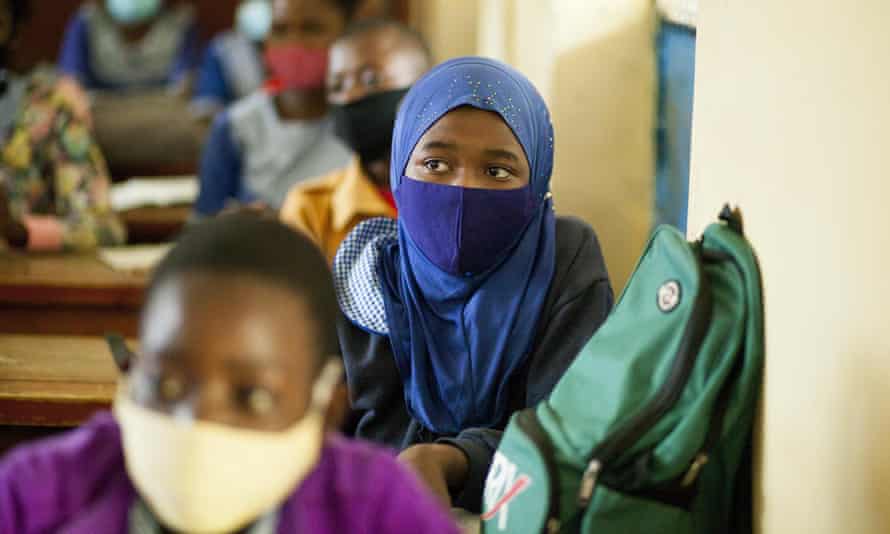
We now have managed to go to main faculties and to run two writing competitions in English and Chichewa. We're primarily self-funded, however have had monetary assist in working the competitions from Asbjørn Eidhammer, Norway’s former ambassador to Malawi, and Asante Mtenje, affiliate professor in English on the College of Malawi.
Among the many many issues I'm completely happy about is that we're not simply an internet discussion board, there have been occasions when we now have been to a college and heard ladies clap their palms and shout, “Makewana!”
We're thriving.
We now have additionally taken half in workshops with organisations resembling Pepeta Malawi, a feminist platform preventing in opposition to gender-based violence, and Wona Collective, which focuses on social advocacy utilizing the humanities. Our interactions with the members have made us much more humbly conscious of the tales on the market and of the artists on this nation, even when publishing alternatives are uncommon.
I’m impressed by how some Malawian girls are embracing traits resembling self-publishing. Having looked for shops for years, they've stepped up, taking again the manuscripts that they had put apart, and are getting their work revealed on their very own phrases.
Visiting the statue of Makewana at Mua, and seeing her lengthy hair, intrigued me, particularly since I had grown up in an period when schoolgirls needed to hold their hair quick. That is nonetheless the case in authorities faculties, and is seen as a type of self-discipline.
Taking a look at a time earlier than all this, the picture of Makewana makes me surprise how she negotiated the difficulty of self-discipline in her time. I hope that I can write with out a paralysing sense of self-censorship, and that ladies writing within the nation will proceed to let phrases rain and reign.
Timwa Lipenga is an creator and lecturer in French on the College of Malawi and director of Makewana’s Daughters
Join Her Stage to listen to straight from unbelievable girls within the growing world on the problems that matter to them, delivered to your inbox month-to-month:


0 Yorumlar